

Cyber Security
Stay HIDDEN. Stay Secure.
Cyber threats are constantly evolving, and a single breach can mean downtime, lost data, and customers who stop trusting you. Too often, businesses treat security as a series of one-off projects, when it should be a structured programme that keeps pace as threats change.
That's where HIDDEN comes in. Our framework for giving you the clarity, control, and confidence to stay protected.


Why cyber security becomes difficult to manage
The problem is rarely one big weakness. As attacks get faster, more automated, and harder to spot, it's the gaps between your people, devices, systems, and network that create the most risk.
Most security setups were never designed as one connected system. A firewall here, antivirus there, MFA on some apps but not all, one training session. Each a sensible step at the time, but no one's quite sure who owns what, or whether you'd actually hold up under a real attack.
The result? You lose visibility, ownership gets blurry, and your IT team ends up holding the whole thing together on top of everything else they're juggling.
HIDDEN helps you validate what's already working and see where the biggest gaps are forming, across six key areas, so you can prioritise and treat your cyber security as what it should be: a strategy, not a series of reactions.

You can probably list the security tools you already use. But if you were asked to explain where your biggest risks lie, could you?
Without the visibility of how your people, identities, data, recovery, endpoints and networks work together, you end up prioritising by guesswork.
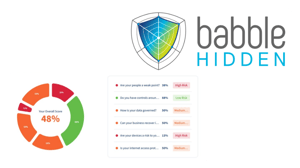
The HIDDEN Snapshot gives you a practical starting point for understanding where risk exists across your systems, where protection is strong, and what needs attention first. It helps you build a clearer picture of how security works across your whole environment, not just inside individual tools.
What the HIDDEN Snapshot gives you:
- Visibility across users, devices, systems, and data
- Clear identification of gaps and weak spots
- Prioritised actions based on real risk
- A measurable baseline for improvement
- A clearer picture of how security works as a whole
What happens next
You’ll receive a practical breakdown of your current position, including where protection is strong, where risks exist, and what to focus on next. No generic recommendations. Just a clearer picture of your environment and a practical path forward.

Protect
Protect your people, identities, data, recovery, endpoints and networks as one system; prioritise with confidence and keep improving over time.


How HIDDEN helps to structure cyber security
Cyber risk rarely lies in one area. It builds across people, identity, devices, data, infrastructure, and recovery processes without warning.
HIDDEN structures cyber security around the six key areas that most commonly create risk, making it easier to identify weaknesses, validate strengths, prioritise action, and improve security consistently over time.

Human risk
Most cyber attacks don’t start with technology, they start with people. Understand where everyday behaviour, awareness, and ways of working could expose the business.
Identity management
Access is your biggest attack surface. Keep access visible and appropriate as users, roles, devices, and suppliers change.
Data controls
Sensitive data is only secure when you can see how it moves. Understand where critical information is stored, shared, accessed, and exposed.
Disaster recovery
Backups don’t matter if you can’t recover. Make sure recovery, continuity, and backup processes work when the business needs them most.
Endpoint protection
Every device is a potential entry point into your business, not just laptops. Maintain visibility, consistency and protection across laptops, mobiles, servers, and connected endpoints.
Network & cloud security
Your network is bigger than you think, and harder to control than it looks. Understand where infrastructure, cloud services and connectivity may be creating hidden risk.

Our partners
We work with leading security vendors to help you improve visibility, strengthen protection, and manage cyber risk more effectively.




I am really pleased that Babble helped to set up and manage this proof of concept project. It gave us the confidence necessary to replace our existing WAF solution. What really impressed us was how easy it was to deploy and use. There are lots of options and depth, but the controls are simple and the dashboards are really clear. We're delighted with the project. It's done exactly what we wanted it to do.
Our cyber credentials







Meet the cyber security specialists
Behind every strong security posture is a specialist team that knows where the risks hide. We work with businesses like yours to make sense of your current setup, find the gaps that actually matter, and turn scattered, reactive security into something structured you can stay on top of, in plain English, without the scare tactics.
Talk to us about how to:
- Understand where your security really stands
- Prioritise the risks that actually matter
- Improve visibility across your users, devices, and data
- Strengthen resilience with practical, prioritised steps
- Move from reactive firefighting to a structured approach