


There are two sentences I still hear all the time: “We’re too small to be a target”, and “We passed Cyber Essentials last year, we’ll be fine.” But from 27 April 2026, both of those statements could put your business in some seriously hot water.
Cyber criminals are no longer manually picking victims. They’re using AI-driven automation to continuously scan thousands of IP addresses and cloud environments. They don’t care about your size, brand, or turnover. All they care about is one thing: whether there’s a digital door they can walk through.
To combat this, the Danzell v3.3 update to Cyber Essentials tightens cloud scoping rules, enforces multi-factor authentication (MFA) where supported, and introduces stricter governance accountability. In other words, what used to be grey areas could now lead to automatic failure.
In this article, we’ll unpack why you can be Cyber Essentials certified today and still fail in 2026. More importantly, I’ll share the measures you can take to make sure that doesn’t happen.
–
What This Article Covers:
- Company Size Is Not a Security Strategy
- Why the Market Is Getting Stricter
- Cyber Essentials Is No Longer a Tick-Box Exercise
- MFA Gaps Now Equal Automatic Failure
- Why Cloud Scoping Is Causing So Many Failures
- Exclusions Are Harder to Justify
- The Ripple Effect of Automatic Failure
- Where to Start Before April 2026
Company Size Is Not a Security Strategy
To this day, the most persistent misconception SMBs have is that their size is a safety net. But it isn’t. Believing that you’re “too small to target” is exactly what cyber criminals are counting on so that they can take advantage of you not having the tools in place that keep them out.
And here’s where things get really scary: modern cyber attacks are becoming increasingly AI-driven, and these attacks don’t require someone to “choose” you. If a large UK brand with deep pockets and internal security teams can be breached, there’s no way a 75-person professional services firm could not suffer the same fate.
 In many cases, small and mid-sized businesses are easier targets because:
-
Cloud tools are adopted quickly without full configuration.
-
MFA isn’t enabled consistently
-
They’re still using legacy systems.
-
Shadow IT creeps in unnoticed.
Cyber Essentials was designed to reduce that baseline risk. But the goalposts have shifted.
Why the Market Is Getting Stricter
Cyber Essentials is getting a lot more rigid because the threat landscape has evolved dramatically.
AI-driven cyber attacks allow criminals to:
-
Test stolen credentials automatically.
-
Scan for exposed cloud services continuously.
-
Identify misconfigurations at scale.
-
Launch phishing campaigns using generative AI.
-
Move laterally faster once inside environments.
The speed and scale of attacks have increased, and as threats scale, expectations follow.
Insurers are tightening underwriting standards because claims are rising. Procurement teams are asking tougher compliance questions because supply chain breaches are increasing. Boards are more aware of the reputational damage linked to data leaks.
Cyber Essentials is becoming a benchmark of governance maturity. If you cannot demonstrate accurate scoping, consistent MFA, and proper oversight, it can signal broader governance weaknesses (not just technical ones).
This is no longer about passing a certification. It’s about proving you take cyber security seriously.
Cyber Essentials Is No Longer a Tick-Box Exercise
In the past, many organisations treated Cyber Essentials as an annual compliance form. Answer the questions, submit, renew, move on. That mindset is now dangerous.
Danzell v3.3 shifts Cyber Essentials (and Cyber Essentials Plus) from a point-in-time declaration to something much closer to an operational audit.
From 27 April 2026, you will be mandated to declare:
-
Every in-scope system
-
Every cloud service storing business data
-
Where MFA is enabled
-
Any exclusions, with justification
-
Governance accountability at the board level
On the last point, a director must formally acknowledge responsibility for maintaining compliance throughout the year, not just at the time of submission. This is a massive shift from “pass the audit” to “prove maturity.” So, not taking it seriously could very well be the first step to failure.
But we don’t want that to happen, so let’s have a closer look at what’s changing.
MFA Gaps Now Equal Automatic Failure
 One of the clearest changes in April 2026 is this: if MFA is supported and not enabled, it can result in automatic failure. This is a big one (and part of why we’re always droning on about turning your MFA on).
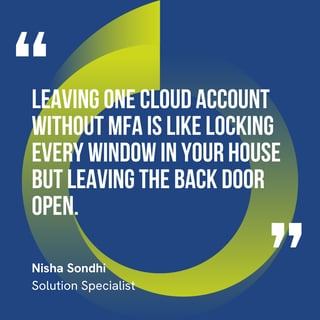
Many businesses believe they’re covered because their IT administrator uses MFA. But what about every single person in the organisation who has access to company data and systems? I’m talking CRM access, Finance systems, HR platforms, shared mailbox accounts, and third-party SaaS (software as a service) tools. All of it needs MFA because Cyber Essentials looks at where it is supported, not where you happen to have it installed.
Attackers don’t need to defeat your strongest controls. They only need your weakest one.
Why Cloud Scoping Is Causing So Many Failures
Scoping errors are already one of the most common causes of failure under the new version. If cloud services aren’t properly declared, the outcome during assessment is usually immediate and binary. Previously, some organisations didn’t include certain cloud services in their scope. But that flexibility has tightened significantly.
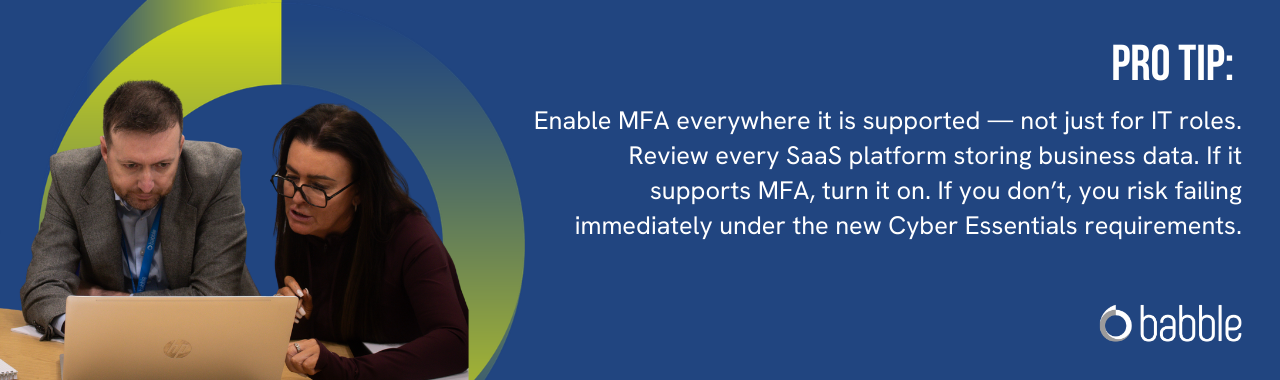
The bottom line is this: if a platform stores or processes business data, it is in scope by default. That includes Microsoft 365, Azure, Amazon Web Services (AWS), Dropbox, and any other SaaS application containing work data. Even if Sophie in Billing stores a single spreadsheet in a cloud tool, that service may now be in scope.
Here’s another common assumption I hear all the time: “Microsoft secures Microsoft 365. That’s their responsibility.” Quite the contrary, my friend. See, Microsoft secures the infrastructure. You are responsible for configuration, user access, MFA, policies, and monitoring. That’s the shared responsibility model I touched on earlier with the board-level accountability.
Exclusions Are Harder to Justify
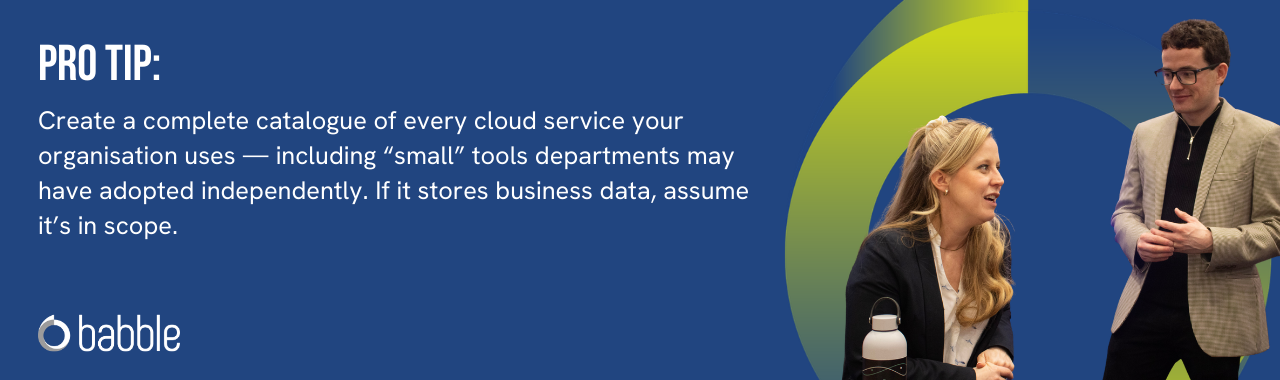
You can still exclude elements from scope, but only with substantial justification.
You must:
-
Declare the exclusion,
-
Demonstrate that it does not access or store organisational data,
-
Present a clear business case, and
-
Have it reviewed and accepted by the auditor.
And it isn’t guaranteed. If the auditor does not accept the exclusion, it needs to be declared. If undeclared services that access business data are discovered, what follows next is – yes, you guessed it – automatic failure.
I sometimes describe what happens here as the “scrambled effect.” Organisations treat the process like paperwork, rush through scoping, and overlook legacy systems or small cloud tools. When those are uncovered later, it becomes a costly remediation exercise.
The Ripple Effect of Automatic Failure
I’ve mentioned this often enough, so let’s unpack what failing Cyber Essentials means. It’s not just an administrative nightmare; the consequences can ripple across the business.
Failure can:
-
Remove you from government supply chains.
-
Disqualify you from tenders.
-
Delay contract awards.
-
Prevent you from bidding on regulated contracts.
-
Remove baseline cyber insurance eligibility.
-
Increase insurance premiums.
-
Allow insurers to refuse payout in the event of breach.
Underwriters are no longer satisfied with tick-box questionnaires. They now request evidence. If you claim you have controls in place, you need to be prepared to show them.
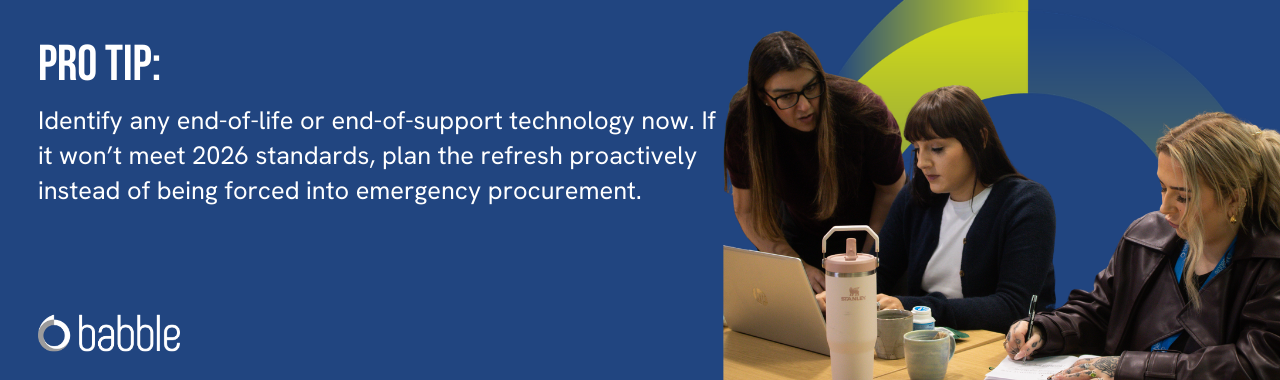
I’ve seen organisations fail because they didn’t declare end-of-life technology. That failure forced them into an unplanned technology refresh. Suddenly, procurement conversations become urgent, budget approvals escalate to the board, the business is forced into a new buying cycle, and what could have been managed over six months becomes compressed into six weeks.
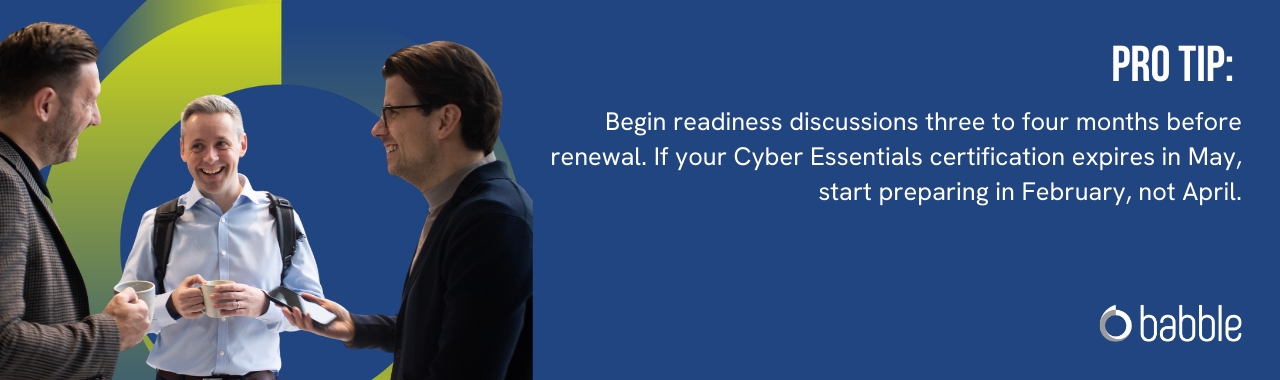
Take it from me, transparency upfront is always cheaper than remediation afterwards because timelines vary and no one can predict how long it’s going to take. Some failures are simple configuration fixes. Others take two or three months before resubmission is possible.
Where to Start Before April 2026
This can all be a lot to process, so if I were at the helm of a 100-person business, I’d start with a simple internal audit.
Ask:
-
What SaaS tools are we using across all departments?
-
Where is MFA enabled — and where is it not?
-
Do we have any legacy or end-of-life systems?
-
Have we completed remediation from our last penetration test?
Most organisations already have pen testing documentation. Review it and make sure all the remediation actions have been implemented. If you don’t know the answers, don’t guess. Pause and assess properly.
The Difference Between Scrambling and Succeeding
The Cyber Essentials changes to be implemented on 27 April 2026 aren’t about making compliance harder. These measures have been put in place to genuinely close security gaps, especially in cloud environments and MFA coverage.
Many organisations that feel secure today could fail under Danzell v3.3. Excluding cloud services, partially enabling MFA, or treating certification as a tick-box exercise are now high-risk approaches.
As someone who works with organisations navigating Cyber Essentials and Cyber Essentials Plus every day, I can tell you that the difference between a smooth pass and a disruptive failure almost always comes down to preparation, transparency, and mindset.
If you’re unsure whether your current setup would pass under the April 2026 requirements, the safest next step is to book a Cyber Risk Assessment with us. We’ll map your cloud scope, validate MFA everywhere, identify exclusions properly, and review legacy systems early. Trust me, it’s far better to find gaps in a controlled assessment than during a formal submission.
.png?width=290&name=Nisha%20Sondhi%20(1).png)

.png?width=40&height=40&name=CA%2021%2c%202026%2c%2009_42_21%20PM%20(1).png)